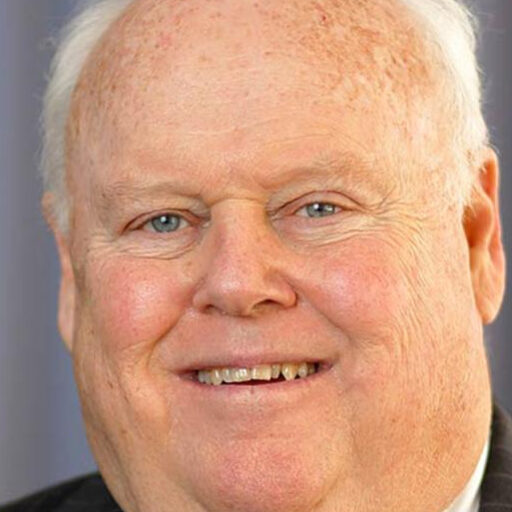
I made a Photomosaic program with a book tutorial heres the code with proper credit
“””
photomosaic.py
Creates a photomosaic given a target image and a folder of input images
Author: Mahesh Venkitachalam
“””
import sys, os, random, argparse
from PIL import Image
import imghdr
import numpy as np
def getAverageRGBOld(image):
“””
Given PIL Image, return average value of color as (r, g, b)
“””
# no. of pixels in image
npixels = image.size[0]*image.size[1]
# get colors as [(cnt1, (r1, g1, b1)), …]
cols = image.getcolors(npixels)
# get [(c1*r1, c1*g1, c1*g2),…]
sumRGB = [(x[0]*x[1][0], x[0]*x[1][1], x[0]*x[1][2]) for x in cols]
# calculate (sum(ci*ri)/np, sum(ci*gi)/np, sum(ci*bi)/np)
# the zip gives us [(c1*r1, c2*r2, ..), (c1*g1, c1*g2,…)…]
avg = tuple([int(sum(x)/npixels) for x in zip(*sumRGB)])
return avg
def getAverageRGB(image):
“””
Given PIL Image, return average value of color as (r, g, b)
“””
# get image as numpy array
im = np.array(image)
# get shape
w,h,d = im.shape
# get average
return tuple(np.average(im.reshape(w*h, d), axis=0))
def splitImage(image, size):
“””
Given Image and dims (rows, cols) returns an m*n list of Images
“””
W, H = image.size[0], image.size[1]
m, n = size
w, h = int(W/n), int(H/m)
# image list
imgs = []
# generate list of dimensions
for j in range(m):
for i in range(n):
# append cropped image
imgs.append(image.crop((i*w, j*h, (i+1)*w, (j+1)*h)))
return imgs
def getImages(imageDir):
“””
given a directory of images, return a list of Images
“””
files = os.listdir(imageDir)
images = []
for file in files:
filePath = os.path.abspath(os.path.join(imageDir, file))
try:
# explicit load so we don’t run into resource crunch
fp = open(filePath, “rb”)
im = Image.open(fp)
images.append(im)
# force loading image data from file
im.load()
# close the file
fp.close()
except:
# skip
print(“Invalid image: %s” % (filePath,))
return images
def getImageFilenames(imageDir):
“””
given a directory of images, return a list of Image file names
“””
files = os.listdir(imageDir)
filenames = []
for file in files:
filePath = os.path.abspath(os.path.join(imageDir, file))
try:
imgType = imghdr.what(filePath)
if imgType:
filenames.append(filePath)
except:
# skip
print(“Invalid image: %s” % (filePath,))
return filenames
def getBestMatchIndex(input_avg, avgs):
“””
return index of best Image match based on RGB value distance
“””
# input image average
avg = input_avg
# get the closest RGB value to input, based on x/y/z distance
index = 0
min_index = 0
min_dist = float(“inf”)
for val in avgs:
dist = ((val[0] – avg[0])*(val[0] – avg[0]) +
(val[1] – avg[1])*(val[1] – avg[1]) +
(val[2] – avg[2])*(val[2] – avg[2]))
if dist < min_dist:
min_dist = dist
min_index = index
index += 1
return min_index
def createImageGrid(images, dims):
“””
Given a list of images and a grid size (m, n), create
a grid of images.
“””
m, n = dims
# sanity check
assert m*n == len(images)
# get max height and width of images
# ie, not assuming they are all equal
width = max([img.size[0] for img in images])
height = max([img.size[1] for img in images])
# create output image
grid_img = Image.new(‘RGB’, (n*width, m*height))
# paste images
for index in range(len(images)):
row = int(index/n)
col = index – n*row
grid_img.paste(images[index], (col*width, row*height))
return grid_img
def createPhotomosaic(target_image, input_images, grid_size,
reuse_images=True):
“””
Creates photomosaic given target and input images.
“””
print(‘splitting input image…’)
# split target image
target_images = splitImage(target_image, grid_size)
print(‘finding image matches…’)
# for each target image, pick one from input
output_images = []
# for user feedback
count = 0
batch_size = int(len(target_images)/10)
# calculate input image averages
avgs = []
for img in input_images:
avgs.append(getAverageRGB(img))
for img in target_images:
# target sub-image average
avg = getAverageRGB(img)
# find match index
match_index = getBestMatchIndex(avg, avgs)
output_images.append(input_images[match_index])
# user feedback
if count > 0 and batch_size > 10 and count % batch_size is 0:
print(‘processed %d of %d…’ %(count, len(target_images)))
count += 1
# remove selected image from input if flag set
if not reuse_images:
input_images.remove(match)
print(‘creating mosaic…’)
# draw mosaic to image
mosaic_image = createImageGrid(output_images, grid_size)
# return mosaic
return mosaic_image
# Gather our code in a main() function
def main():
# Command line args are in sys.argv[1], sys.argv[2] ..
# sys.argv[0] is the script name itself and can be ignored
# parse arguments
parser = argparse.ArgumentParser(description=’Creates a photomosaic from input images’)
# add arguments
parser.add_argument(‘–target-image’, dest=’target_image’, required=True)
parser.add_argument(‘–input-folder’, dest=’input_folder’, required=True)
parser.add_argument(‘–grid-size’, nargs=2, dest=’grid_size’, required=True)
parser.add_argument(‘–output-file’, dest=’outfile’, required=False)
args = parser.parse_args()
###### INPUTS ######
# target image
target_image = Image.open(args.target_image)
# input images
print(‘reading input folder…’)
input_images = getImages(args.input_folder)
# check if any valid input images found
if input_images == []:
print(‘No input images found in %s. Exiting.’ % (args.input_folder, ))
exit()
# shuffle list – to get a more varied output?
random.shuffle(input_images)
# size of grid
grid_size = (int(args.grid_size[0]), int(args.grid_size[1]))
# output
output_filename = ‘mosaic.png’
if args.outfile:
output_filename = args.outfile
# re-use any image in input
reuse_images = True
# resize the input to fit original image size?
resize_input = True
##### END INPUTS #####
print(‘starting photomosaic creation…’)
# if images can’t be reused, ensure m*n <= num_of_images
if not reuse_images:
if grid_size[0]*grid_size[1] > len(input_images):
print(‘grid size less than number of images’)
exit()
# resizing input
if resize_input:
print(‘resizing images…’)
# for given grid size, compute max dims w,h of tiles
dims = (int(target_image.size[0]/grid_size[1]),
int(target_image.size[1]/grid_size[0]))
print(“max tile dims: %s” % (dims,))
# resize
for img in input_images:
img.thumbnail(dims)
# create photomosaic
mosaic_image = createPhotomosaic(target_image, input_images, grid_size,
reuse_images)
# write out mosaic
mosaic_image.save(output_filename, ‘PNG’)
print(“saved output to %s” % (output_filename,))
print(‘done.’)
# Standard boilerplate to call the main() function to begin
# the program.
if __name__ == ‘__main__’:
main()